

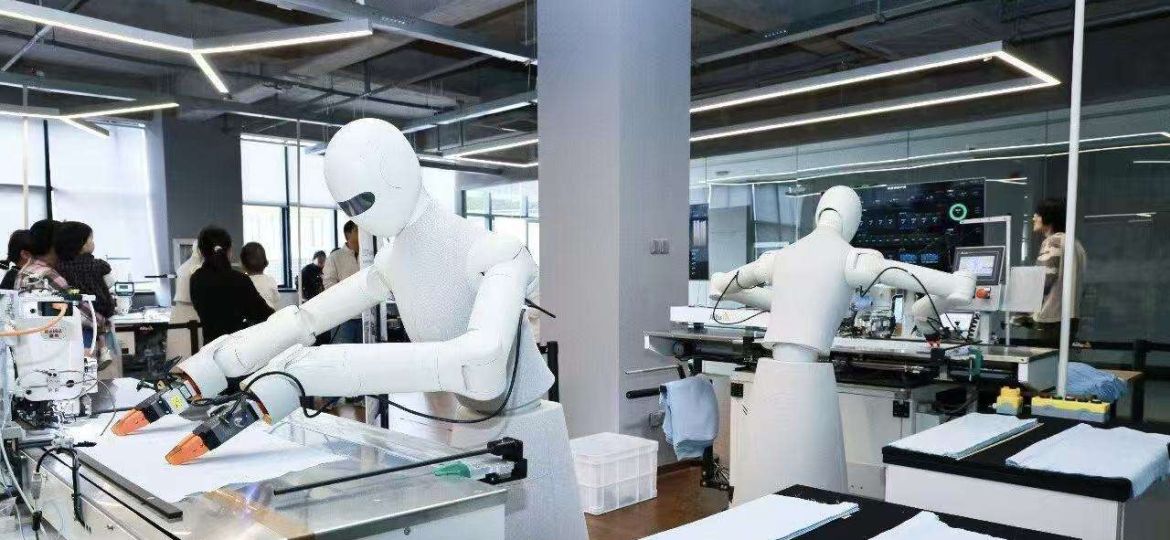
Welcome to the Future of Garment Manufacturing
We are bringing AI-powered robotics into clothing production. At Tongli Clothing, advanced robotic sewing technology is helping us move beyond traditional garment manufacturing toward a smarter, more precise, and more flexible production environment.
Discuss Your Clothing Project Explore Our Smart FactoryWe Believe the Future of Clothing Manufacturing Is Intelligent
The way clothes are made is changing. We are not simply adding more sewing machines to our production floor. We are exploring how intelligent robots, AI vision systems, and automated sewing equipment can work together with experienced garment professionals.
For many years, garment manufacturing has depended on the skill and experience of sewing operators. Their ability to handle soft fabrics, align different garment panels, control stitching, and maintain consistent quality is difficult to replace with conventional automation.
Now, advances in artificial intelligence and robotics are creating new possibilities. Robots can be designed to recognize fabric, pick up individual pieces, position materials, and cooperate with industrial sewing machines. Tasks that once required careful manual handling can increasingly be supported by intelligent equipment.
At Tongli Clothing, we are bringing this new technology into our garment manufacturing environment. Our goal is to combine the precision of automated equipment with the experience of skilled workers, creating a production process that is more consistent, efficient, and adaptable to changing customer requirements.
Robots Are Becoming Part of Our Garment Production Process
One of the most interesting developments in clothing manufacturing is the use of humanoid robots for sewing-related operations. Unlike conventional industrial robots that repeat fixed movements, AI-assisted sewing robots are being developed to handle soft, flexible materials and work alongside specialized sewing equipment.
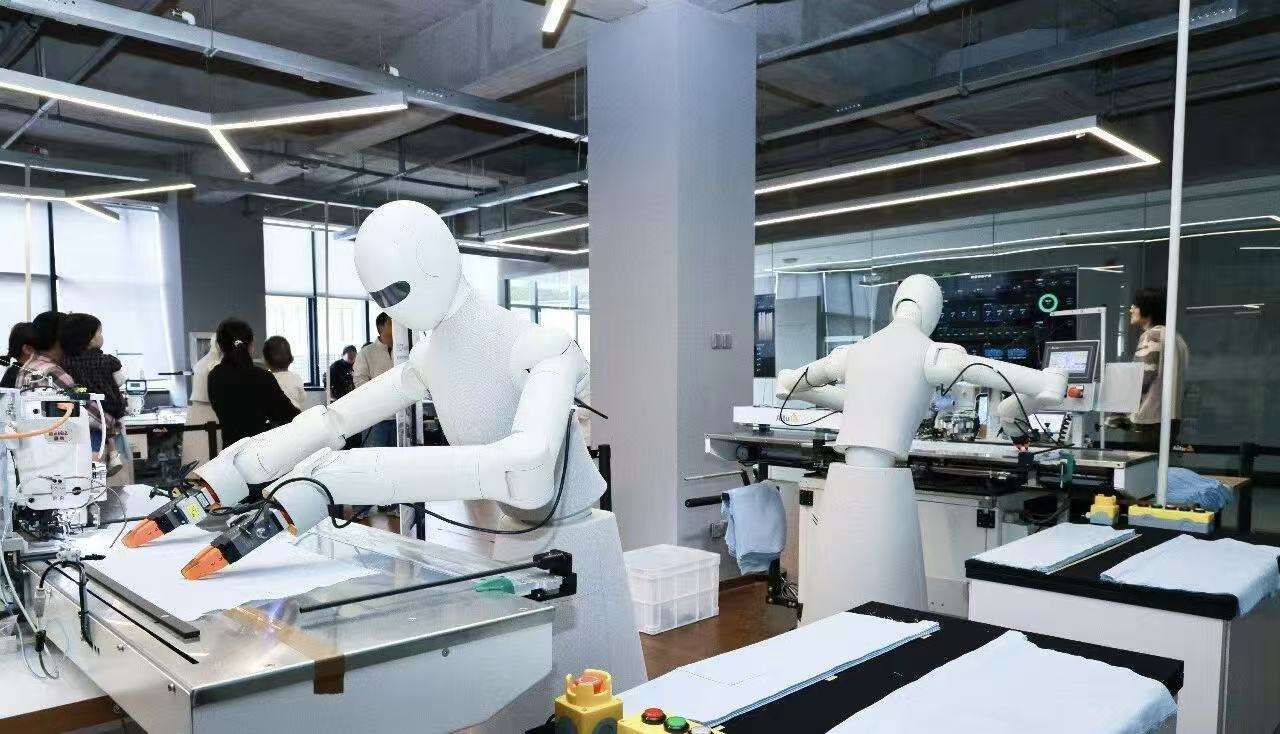
The robotic sewing equipment shown in our production environment combines robotic arms, fabric-handling mechanisms, and industrial sewing machines. Its purpose is to assist with material handling and selected sewing operations, bringing more automation to tasks that have traditionally depended on manual work.
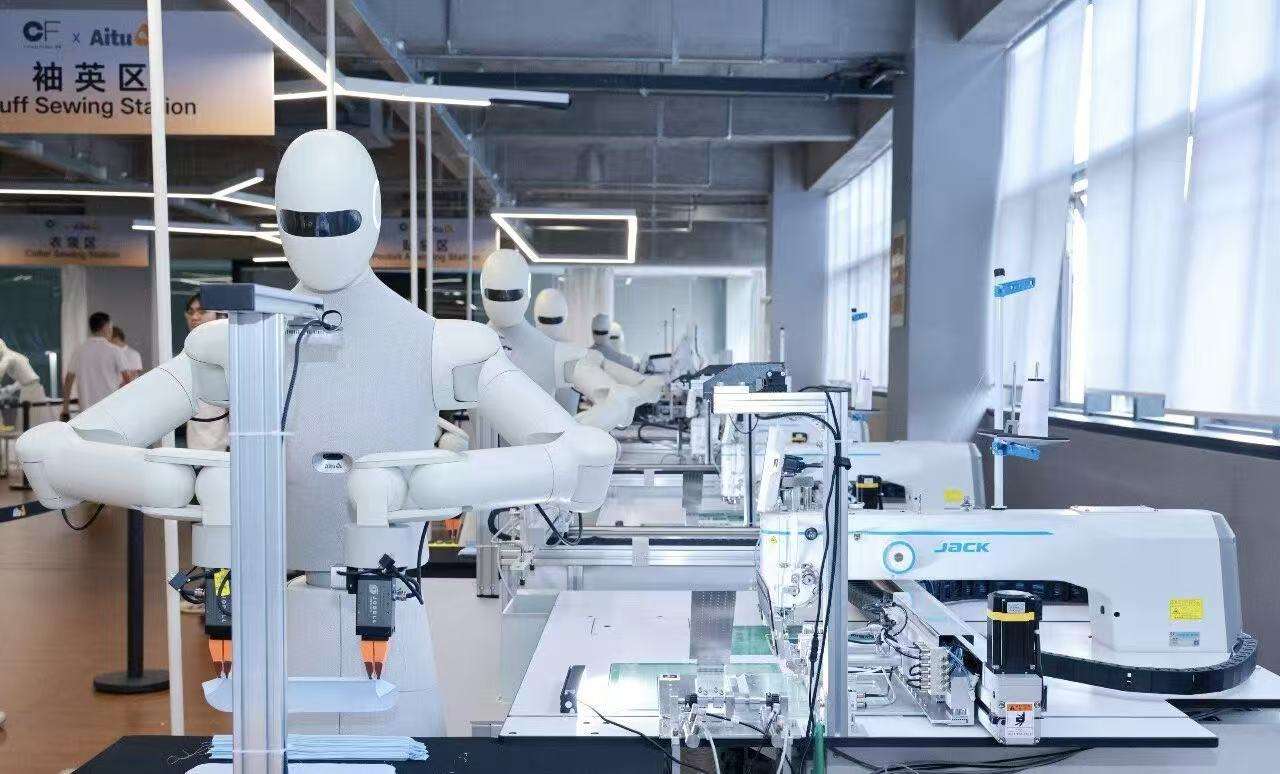
Why Is It So Difficult to Automate Clothing Production?
Manufacturing a metal component is very different from manufacturing a garment. Metal parts usually maintain their shape, while fabrics are soft, flexible, and easily deformed.
A small change in fabric tension or positioning can affect the final stitching result. Different materials also behave differently. Cotton, polyester, denim, woven fabrics, and stretch fabrics each require appropriate handling.
This is why robotic sewing is more challenging than simply programming a machine to move along a fixed path. The system needs to understand where the fabric is, how it is positioned, and how to handle it without creating wrinkles or damaging the material.
Flexible Fabric Handling
Soft materials can slip, fold, stretch, or overlap. Intelligent handling systems help identify and position fabric pieces more consistently.
Accurate Alignment
Fabric panels need to be correctly positioned before sewing. Vision-guided systems can help identify positioning errors and support correction.
Different Sewing Processes
Collars, cuffs, pockets, and other garment components require different handling and stitching methods. Production flexibility is essential.
From Fabric Recognition to Robotic Sewing
An AI-assisted sewing workstation combines several technologies. Rather than relying entirely on an operator to pick up, align, and feed every fabric piece, the system coordinates visual recognition, robotic movement, and sewing equipment.
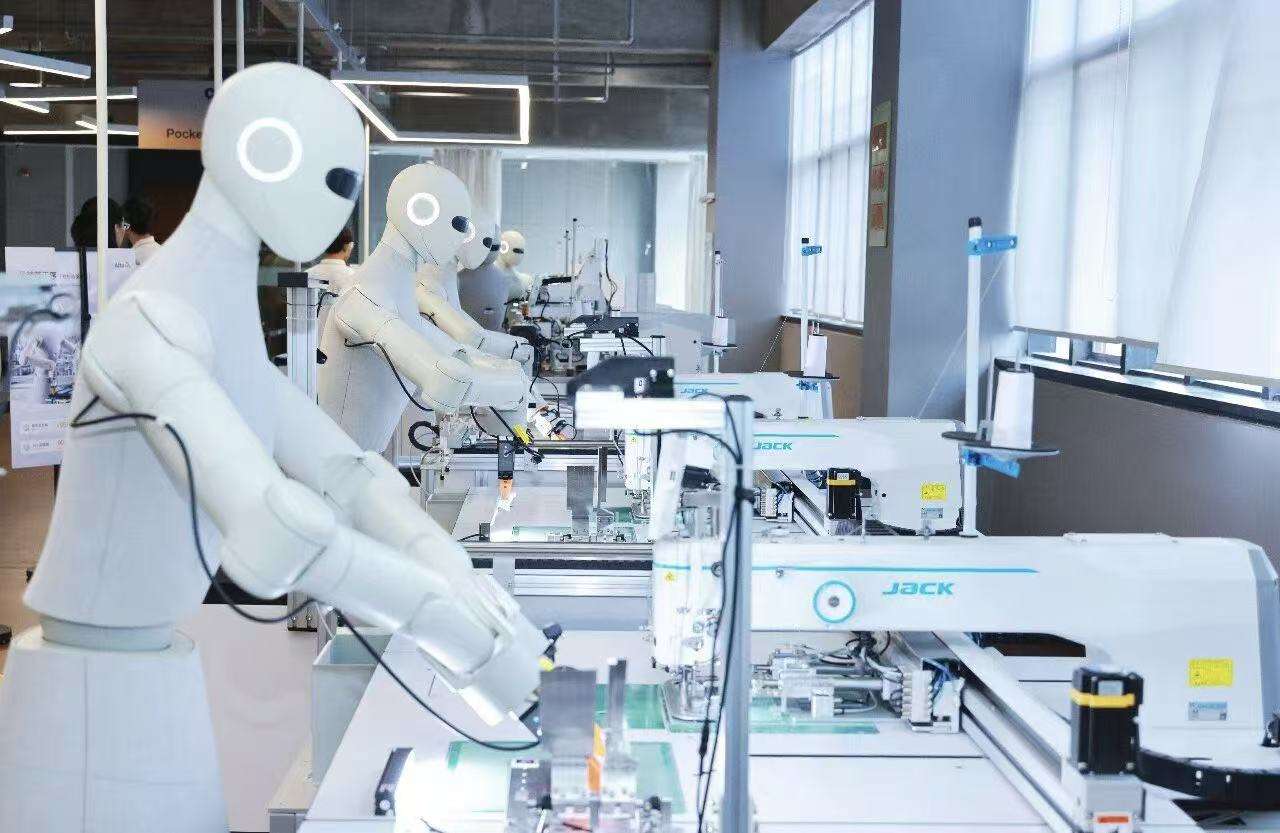
1. Intelligent Fabric Recognition and Handling
The first challenge is identifying and handling individual fabric pieces. An AI vision system can help recognize material position, while robotic hands perform picking, separation, and placement tasks.
This is particularly important for garments with multiple panels and components. More consistent material handling can help reduce positioning errors before the sewing stage begins.
2. Fabric Positioning and Automatic Correction
Fabric may shift or wrinkle during handling. Vision-guided systems can monitor its position and support adjustments before and during designated sewing operations.
This technology is intended to reduce dependence on repeated manual positioning. It does not mean that every fabric problem can be corrected automatically, but it creates new opportunities for more consistent sewing preparation.
3. Coordination with Industrial Sewing Machines
The robot does not work in isolation. It needs to coordinate with the sewing machine, fixtures, and production process. Robotic movement and machine operation must be synchronized to complete the designated task.
This combination of robotics and specialized sewing equipment is an important step toward more intelligent garment manufacturing.
More Than a Robot: AI, Vision, and Precision Control
The Aini sewing robot introduced by Aitu Technology, a company under Jack Technology, is an example of how AI is being applied to real garment sewing tasks. Its technical approach combines visual recognition, fabric-handling mechanisms, and AI-assisted sewing coordination.
Technology reference: Aitu Intelligent Sewing Technology. Specific performance depends on the robot model, fabric, sewing process, and production setup.
What makes this development important is the combination of hardware and software. A robot needs more than mechanical movement to work with clothing materials. It needs to recognize the fabric, understand the task, and coordinate its actions with the sewing machine.
This is the direction in which intelligent sewing technology is developing: from fixed automation toward more flexible systems that can support different garment operations.
A Modern Production Environment Built Around Human and Machine Collaboration
A smart garment factory is not defined by robots alone. It also requires suitable production layouts, well-organized workstations, skilled operators, technical support, and quality management.
At Tongli Clothing, we see robotics as part of a broader manufacturing upgrade. By combining modern sewing equipment with experienced production teams, we aim to build a working environment where technology supports practical garment production.
How Smart Manufacturing Can Benefit Clothing Buyers
For international clothing brands, choosing a garment manufacturer is about more than finding a factory with enough sewing machines. Buyers need consistent quality, reliable production planning, flexible manufacturing, and clear communication.
More Consistent Production
Automated handling and positioning can help reduce variations in designated operations and support repeatable manufacturing processes.
Improved Production Efficiency
Automation can reduce some repetitive handling tasks, allowing operators to focus on production supervision, quality, and other skilled activities.
Better Process Control
Combining machinery, software, and production procedures creates opportunities for more standardized work processes.
Flexible Manufacturing Potential
AI-assisted systems are being developed to adapt to selected garment processes, which is relevant to changing styles and product requirements.
Technology-Driven Quality Management
Automation can support repeatability, while experienced quality teams remain responsible for inspecting materials, stitching, measurements, and finished garments.
A More Modern Supply Chain
Investment in intelligent equipment helps manufacturers prepare for the changing expectations of international clothing brands.
These benefits depend on the garment style, fabric characteristics, production volume, and the specific processes assigned to automation. We evaluate manufacturing requirements according to each order rather than promising that one technology will solve every production challenge.
Robots and Skilled Garment Workers Work Better Together
Garment production involves many different skills. Pattern development, fabric selection, sample making, sewing, finishing, and quality inspection all require experience and judgment.
Robots are particularly useful for designated repetitive operations that can be standardized. Experienced workers remain essential for handling complex garments, evaluating workmanship, managing exceptions, and maintaining quality.
Our approach is to use automation where it creates practical value while keeping skilled people involved in the manufacturing process.
Where Technology Helps
- Fabric separation and handling
- Material positioning and alignment
- Selected repetitive sewing tasks
- Production process coordination
- Repeatable workstation operations
Where People Remain Essential
- Product development and pattern making
- Complex sewing and finishing
- Quality inspection and judgment
- Production management
- Customer-specific customization
Smart Equipment Is Part of Our Broader Manufacturing Capability
At Tongli Clothing, our goal is to combine modern production technology with the manufacturing capabilities needed by international apparel brands.
Our website introduces our OEM and ODM apparel manufacturing services, including activewear, yoga wear, and broader clothing categories. We work with customers on product development, customization, and production requirements.
What We Bring to Clothing Manufacturing Projects
- OEM and ODM production: Support for customer designs, product specifications, and customized garment orders.
- Product development: Design coordination, sample development, and pattern-related support.
- Apparel manufacturing: Production capabilities across multiple clothing categories, including activewear and yoga wear.
- Modern equipment: Investment in advanced sewing machinery and exploration of AI-assisted robotic manufacturing.
- Production quality management: Attention to materials, stitching, measurements, finishing, and order specifications.
Our aim is to create a manufacturing environment that combines industrial experience, modern equipment, and flexible production capabilities to serve international clothing buyers.
Whether you are developing a new clothing collection or looking for a manufacturing partner for an established product line, we believe that the right combination of people, equipment, and production management makes the difference.
Moving Toward a Smarter Future of Garment Manufacturing
The development of AI and robotics is opening a new chapter for the apparel industry. Sewing automation is gradually moving beyond simple repetitive machine movements toward intelligent systems that can interact with flexible fabrics and support more complex production tasks.
We believe this transformation will create new opportunities for manufacturers and clothing brands alike. More intelligent production equipment, better process coordination, and stronger manufacturing systems can help the industry respond to changing customer expectations.
At Tongli Clothing, we are committed to exploring these opportunities and continuing to improve our manufacturing environment. We want our customers to see not only what we can produce today, but also how we are preparing for the next generation of clothing manufacturing.
Looking for a Modern Garment Manufacturing Partner?
We welcome international clothing brands, fashion businesses, and wholesale buyers looking for OEM and ODM garment manufacturing solutions. Tell us about your products, materials, and order requirements. Our team will discuss how our manufacturing capabilities can support your project.
Discuss Your Clothing Project Explore Tongli ClothingFrequently Asked Questions About Robotic Garment Manufacturing
1. Can robots actually sew clothes?
Yes. AI-assisted sewing robots are being developed to handle fabric, position garment pieces, and cooperate with industrial sewing machines. They are currently most suitable for selected sewing operations that can be standardized. Complex garment production still requires human skills and supervision.
2. What tasks can a sewing robot perform?
Depending on the equipment and configuration, robotic sewing systems can support fabric separation, material gripping, fabric placement, alignment, and designated sewing operations such as collars, cuffs, pockets, buttonholes, and button attachment.
3. Does robotic sewing mean that a garment factory no longer needs workers?
No. Robots can assist with repetitive and standardized tasks, but garment manufacturing still requires people for product development, complex sewing operations, quality inspection, production management, and problem-solving.
4. What are the benefits of robotic sewing for clothing brands?
Potential benefits include more consistent material handling, improved repeatability in selected sewing operations, reduced repetitive manual work, and better production process control. Actual results depend on the garment style, fabric, equipment, and production conditions.
5. Does Tongli Clothing provide OEM and ODM garment manufacturing?
Yes. Tongli Clothing presents OEM and ODM apparel manufacturing services for international customers, including customized clothing and activewear production. Buyers can contact our team to discuss product design, materials, samples, and order requirements.
6. Can I visit Tongli Clothing to learn more about its manufacturing capabilities?
International buyers can contact our team to discuss a factory visit and learn more about our garment manufacturing capabilities, equipment, and production processes.
Technology note: Aini is an AI-powered sewing robot introduced by Aitu Technology, a subsidiary of Jack Technology. References to its technical capabilities describe the technology developer’s published information and should not be interpreted as independently verified production results at every Tongli manufacturing line.
Learn more about the technology: Aitu AI Sewing Robot | Aitu Technology.